
Tim Liu joined a two-person legal team at RHINOSHIELD, where contract requests filtered through an aging and unused ERP system. Most of their time went to lengthy agreements with suppliers, licensors, and distributors, plus templates that influencers in the US, Japan, France, Germany, etc., sent back with small edits in their own languages. For anything outside Chinese and English, Tim ran a manual relay. He pulled out the clause, ran it through Google Translate, drafted a response in English, translated it back, and pasted it in.
The bigger cost came when leadership needed an answer. Assessing the risk of a business move meant tracking down and reading every related supplier, customer, and license agreement, which took two to three days. That lag kept Legal on the sidelines until deals were nearly done. When Sales lined up a major order with a very influential channel, due for delivery within a month, Tim saw the contract only at the end. He found that the channel is not within the relevant license agreement’s license scope, thereby flagging a substantial legal risk. The team secured the IP owner's approval in time, but the near miss showed how much risk sat in the gap between departments.
As the workload grew, leadership asked Tim to consider hiring experienced help and putting AI to work.
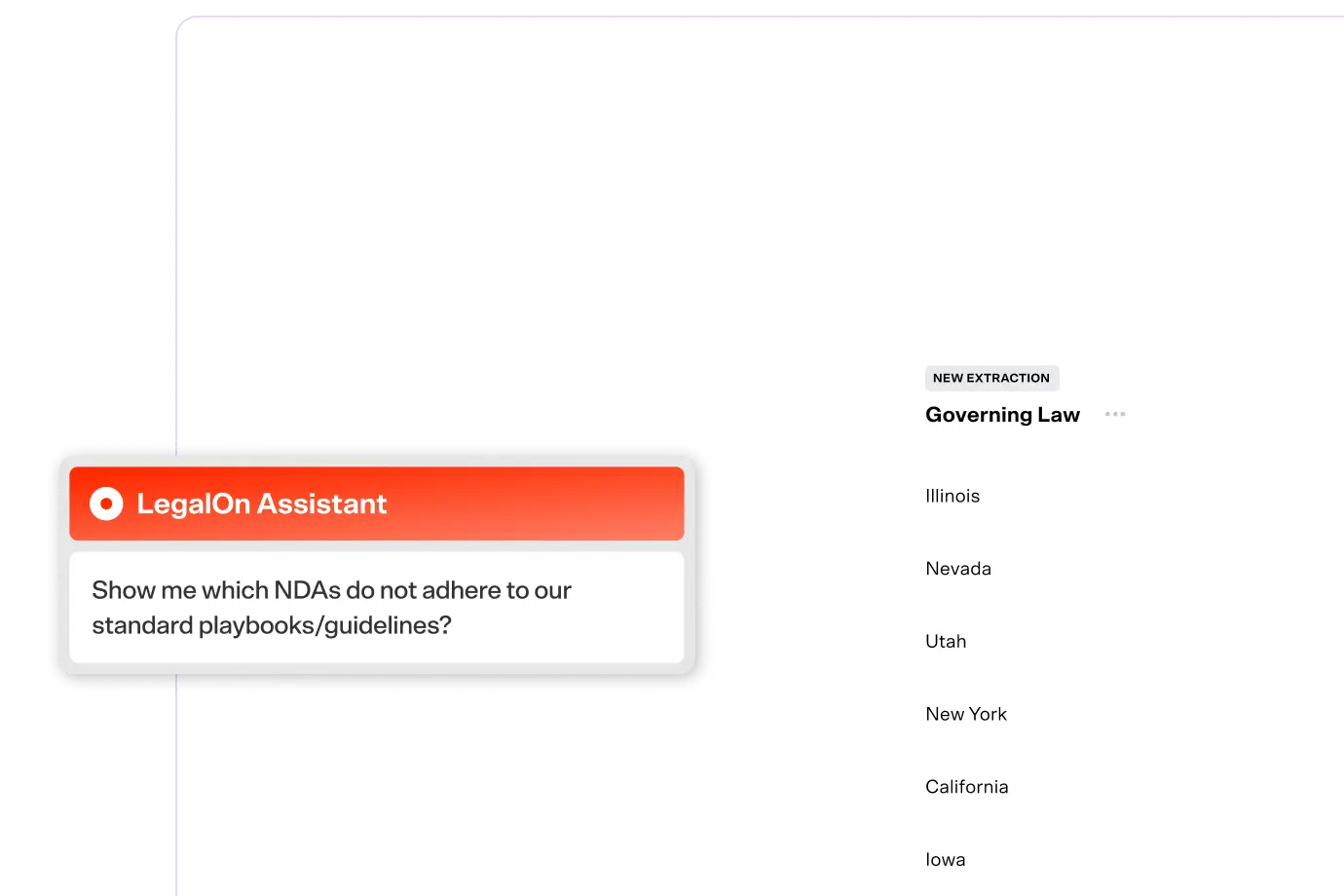
License agreements are RHINOSHIELD’s longest and most common contracts. So the lawyers built a shared set of LegalOn Assistant prompts and rules of its own playbooks around the clauses that matter most to them. For example, when a license comes through an agency instead of the IP owner, they confirm the agency warrants its right to sublicense for the full term, indemnify for breach thereof, and cross out termination at convenience at IP owner’s request. LegalOn highlights the relevant clauses, and the team starts its review from there instead of on page one.
The translation relay is gone. The team asks the LegalOn Assistant, in whichever language they prefer, what a counterparty changed in a French amendment, for example. They then have it revise the clause directly in the contract's language, such as carving breach of confidentiality and IP warranty out of the counterparty's liability cap.
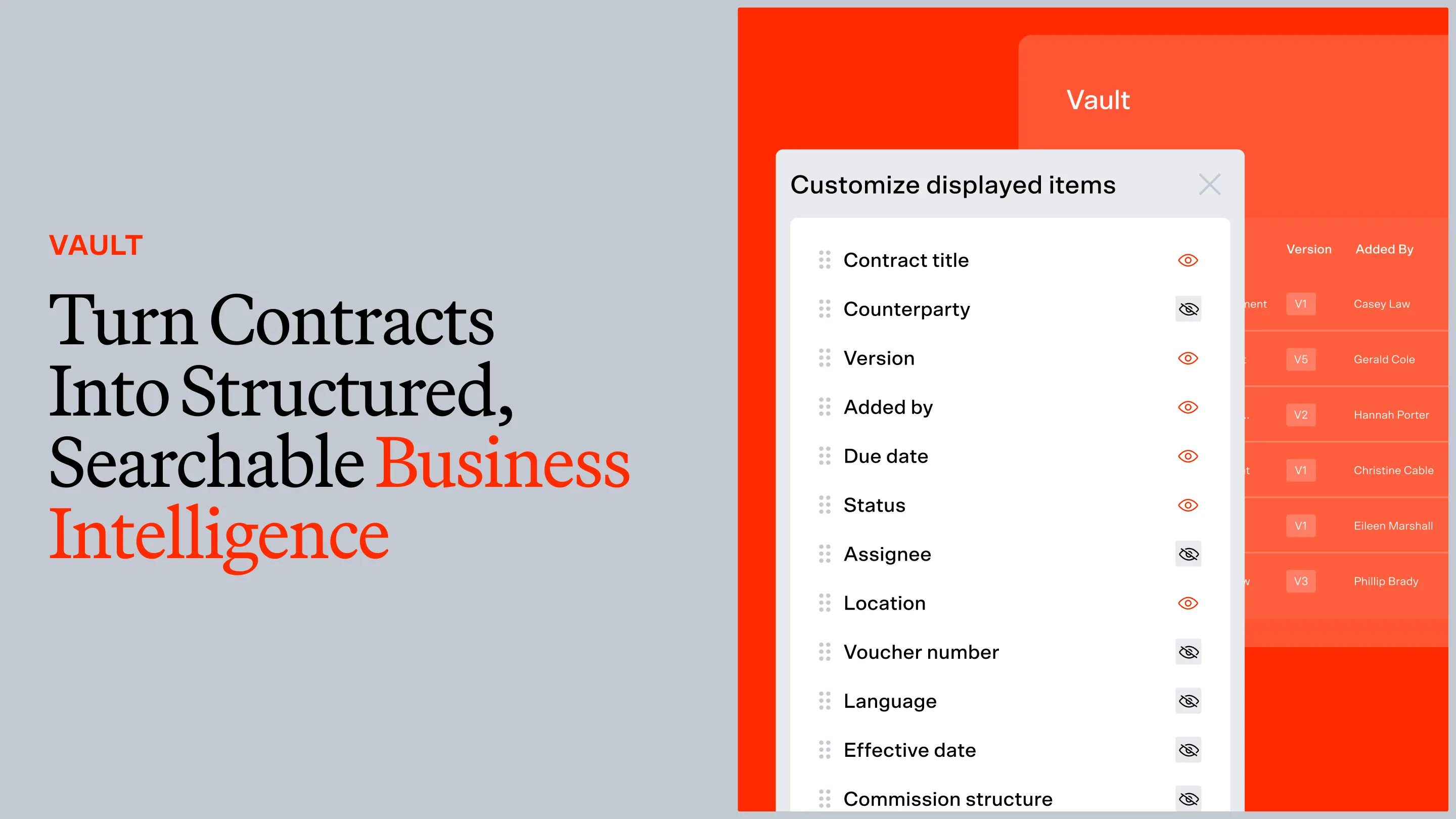
Vault gives Legal the company-wide view that Sales and Procurement don't have on their own. When Sales desire to close a large order with unlimited liability terms, Tim used Vault to check the outsourced vendor and found its liability was capped, leaving RHINOSHIELD exposed above that amount. He suggested two options, and the company eventually went back to the vendor and renegotiated the cap.
LegalOn also helps the team share the load. The team is now four people, including a patent engineer. A junior associate reviews short contracts and NDAs in LegalOn and prepares briefs that Tim reviews before release, so he no longer runs first-pass reviews himself.
After an earlier tool's 1,000-document cap stalled its rollout, RHINOSHIELD moved to LegalOn for contract review and Vault. Tim tested LegalOn on real work before relying on it. His first test was a vendor relationship with a main agreement and four amendments. He uploaded all five, asked LegalOn Assistant for the payment terms and deliverables after the fourth amendment, and checked each cited reference against the source. The answers held up. The review took two to three hours instead of two to three days.
That kind of work used to go to an associate, with Tim double-checking the result. Now he relies on LegalOn for it. The rest of the legal team uses LegalOn day to day, and contracts are moving into Vault in stages.
Since adopting LegalOn, RHINOSHIELD has seen measurable gains:
"I used to spend a lot of time and overtime just reading through contracts. Now I might do 20 to 30 hours of contract review a month, which frees up around 100 hours of my time, and is finally allowed to devote my time in advising the management at earlier stage of the company’s business. I definitely feel the difference." — Tim Liu, Head of Legal, RHINOSHIELD
Tim sees Legal as the one team that reads every contract, from procurement to sales, which gives it a unique view of the company’s full risk exposure. Pulling the right contracts together used to take days, and business teams saw Legal as the reason deals slowed down. With Vault and LegalOn Assistant, Legal answers fast enough to be brought in early, which Tim says has built trust. The team now advises leadership on risk and negotiation strategy instead of only approving or rejecting contracts.
LegalOn covers the day-to-day groundwork, like finding contracts and piecing together amendments. The team checks every reference, so they move faster and stand behind the answer. That frees Tim and his team to apply their knowledge of the company, its supply chain, and its industry where it counts, in negotiations and in advising the business.
“With legal AI, we can answer questions faster and come up with suggestions that are very helpful for the business. We're moving from a yes-or-no department into a strategy partner,” Tim notes.
Tim believes most companies haven’t tapped what their legal department can really do. He wants to spend less of his own time on contract review and more advising leadership on business strategy, with Legal brought into deals early as a partner. He also plans to give his junior associate more complex contracts, confident they can handle them with LegalOn. As more of RHINOSHIELD's contracts move into Vault, Legal will have the full picture fast enough to weigh in when it matters.
Ready to do more with the team you have? Book a demo to see how LegalOn handles the day-to-day groundwork so your team can focus on advising the business.