.svg)

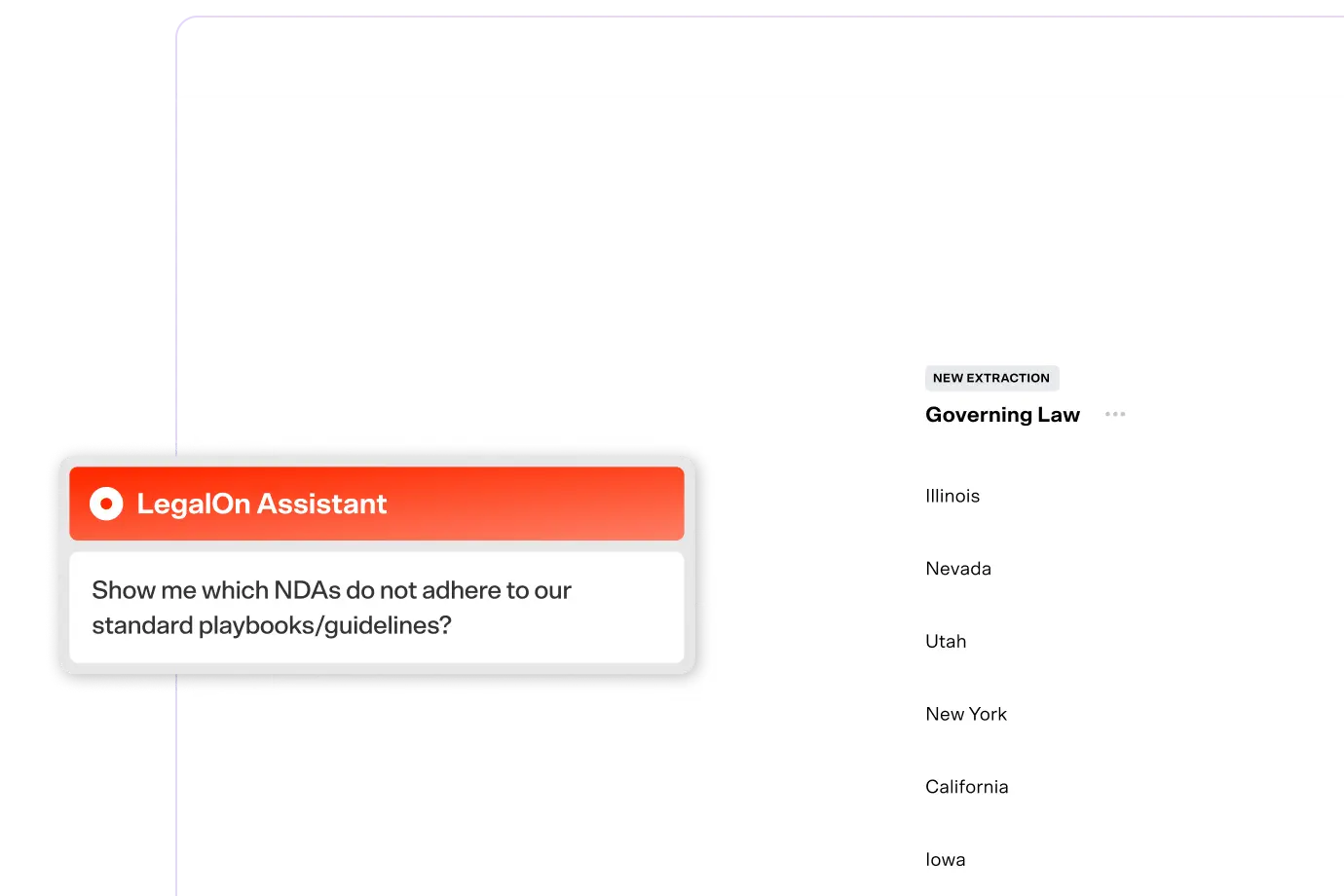



See how LegalOn Assistant answers your team's contract questions in seconds — grounded in playbooks real attorneys wrote, right inside the tools you already use.


Brief
AI legal assistant software uses artificial intelligence to answer legal questions, draft and revise language, summarize documents, and surface risks, usually within the tools legal teams already use. This year's best AI legal assistant tools include LegalOn for in-house legal teams, Harvey for large law firms, and Spellbook for contract-focused drafting.
Our team has talked to thousands of in-house legal departments, and the bottleneck is the same. A contract question sits unanswered in someone’s inbox. A redline waits in an unopened document. Routine work stacks up, and attorneys have no time to tackle requests that require legal judgment.
AI legal assistant software is built to clear that backlog by answering questions, drafting language, and surfacing risk in seconds, so your team can get to the work that actually matters.
The number of AI legal assistants has multiplied faster than any team can reasonably evaluate. In this guide, we’ll walk you through what they are and the best options built for legal work.
Get attorney-grounded answers, drafts, and summaries right where you work with LegalOn Assistant.
What is AI Legal Assistant Software?
AI legal assistant software uses artificial intelligence to answer legal questions, draft and revise contract language, summarize documents, extract key terms, and flag risk, with reasoning typically grounded in legal standards.
This is different from a general legal AI assistant like ChatGPT or Claude, both of which reason from broad training data with no knowledge of your playbooks or risk thresholds. Though Claude has now released Claude Cowork for Legal, it remains a general tool, only with premade plugins for legal work.
The best AI legal assistant software doesn't require you to leave your existing tools. It should work inside Microsoft Word, your browser, or your contract repository, and your team should be productive from day one rather than after months of configuration.
Why Legal Teams Are Turning to AI Legal Assistants
In legal teams, adopting AI legal assistant software isn't a slow trend. The 2026 data shows an inflection point across in-house legal and legal operations.
- General counsel adoption nearly doubled in a year. 87% of general counsel now report using generative AI within their teams, up from 44% in 2025 (FTI Consulting & Relativity, 2026).
- In-house counsel adoption more than doubled. 52% of in-house counsel are actively using generative AI, up from 23% the prior year, according to the ACC/Everlaw GenAI Survey (ACC & Everlaw, 2025).
- Teams expect to rely less on outside counsel. 64% of in-house teams expect generative AI to reduce their dependence on outside counsel as the technology matures (ACC & Everlaw, 2025).
- Contract review remains the clearest use case. In LegalOn's own 2026 State of AI for In-House Legal survey, 87% of respondents said AI would benefit contract review and redlining, and 79% reported reduced time spent on routine legal tasks.
The data is clear: with workloads rising and headcount staying the same across legal departments, the need for AI assistance is higher than ever, especially for contract review.
The good news is that in-house teams have more options for automating contracts. They can either adopt an AI legal assistant or implement a dedicated AI contract review software.
AI Legal Assistant Software vs. AI Contract Review Software
AI contract review software runs a full contract against a defined playbook and returns a prioritized list of risks and redlines.
On the other hand, an AI legal assistant is conversational. You ask it about a clause, request a summary, or have it draft fallback language on demand. This can be useful, but it will never replace an automated contract review tool.
That’s why most teams use both.
When to Use an AI Legal Assistant vs AI Contract Review
Reach for contract review software when you have a complete agreement to evaluate and when you need redlining consistency. For instance:
- A first-pass review of an inbound vendor paper
- An NDA you need to redline against your playbook
- A stack of renewals that all need the same standards applied
AI contract review tools are built for volume and repeatability, so every reviewer flags the same issues the same way.
Reach for an AI legal assistant when the task is narrower or more exploratory. For instance:
- You’d like to understand what a single indemnification clause actually means
- You’re drafting a fallback position mid-negotiation
- You’re summarizing a contract for a business stakeholder
Legal AI assistants are generally faster for one-off questions that don’t warrant a full review.
In practice, most legal work needs both, but switching between disconnected tools causes attorneys to lose context and time.
Many platforms, including LegalOn, bring the two together to power the entire legal workday. The assistant handles the ad hoc questions and drafting, and the review engine runs the systematic, playbook-driven contract analysis, both grounded in the same attorney-built playbooks.
A fallback clause you draft in the AI legal assistant reflects the same standards as shown in each contract review, and vice versa. That shared foundation is what turns two features into one legal agentic workflow.
Get attorney-grounded answers, drafts, and summaries right where you work with LegalOn Assistant.
Who Uses AI Legal Assistant Software?
AI legal assistant software has moved well past early adopters. Teams of every size use it:
In-House Legal Departments
For in-house counsel, an AI legal assistant answers questions about contracts and policies in seconds.
Small teams lean on it when they need an additional “teammate” without adding headcount. Larger departments use it to standardize how questions get answered across every reviewer.
General Counsel and Legal Operations
Legal leaders use AI legal assistants to reduce the volume of routine questions landing on their desks and to give their teams a consistent, attorney-grade response. Legal ops teams deploy these tools to standardize workflows, track how time is actually spent, and make the case for further investment in legal tech.
Contract Managers and Paralegals
The people doing the daily work of reviewing, redlining, and tracking contracts use AI legal assistants to extract key terms, summarize obligations, and draft fallback language without leaving the document they're already working in.
Procurement, Sales, and Compliance Teams
AI legal assistants aren't only for lawyers. Procurement and sales contract teams use self-serve assistants to answer basic contract questions without waiting on legal, freeing lawyers to focus on higher-risk work.
Law Firms
Law firm attorneys use AI legal assistants for research, drafting, and due diligence at a scale no individual associate could match manually, letting firms take on more matters and pass efficiency gains on to clients.
What Can In-House Legal Teams Automate With AI Legal Assistant Tools?
The clearest value of AI legal assistant tools shows up in the volume of routine work they can handle. Here's what's realistic to automate today.
- Contract Q&A and summarization. Ask a question about any contract, or your whole repository, and get an answer in seconds instead of searching manually.
- First-pass risk flagging. Surface non-standard language and missing clauses before a lawyer opens the document.
- Fallback language drafting. Generate draft clauses and redlines grounded in your organization's preferred language, ready for a lawyer to review and send.
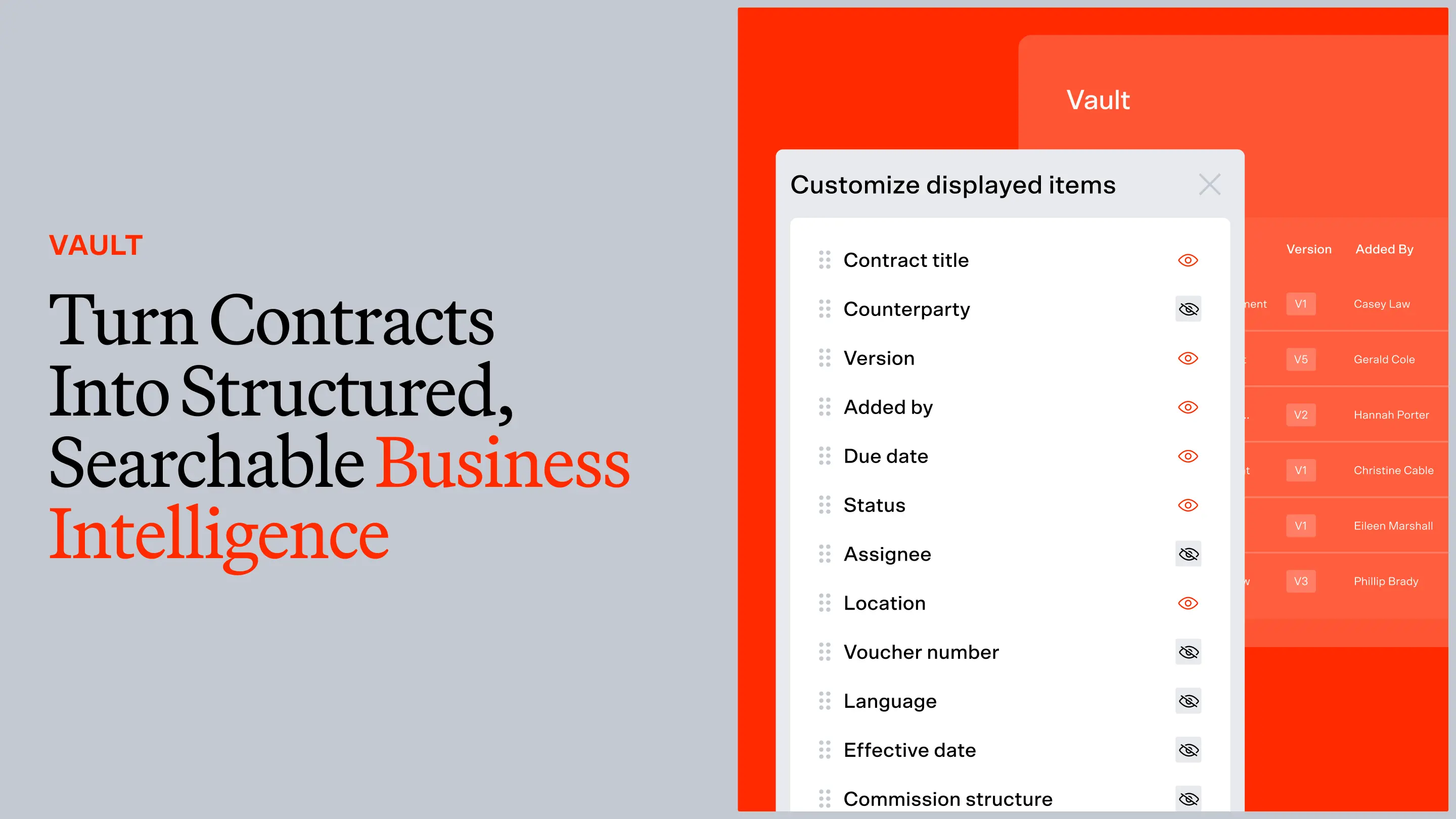
- Key term extraction. Pull obligations, renewal dates, and counterparty terms into a structured summary instead of a static file.
- Self-serve answers for business teams. Let procurement, sales, and other departments get quick answers to common contract questions without opening a ticket with legal.
- Definition and clause lookups. Instantly surface how a defined term or clause is used elsewhere in a contract or across your library.
- Routine intake triage. Route incoming requests to the right reviewer with the right context attached, instead of an unstructured inbox.
None of this replaces legal judgment. A lawyer still reviews the output and makes the final call. What changes is how much of the repetitive, first-pass work your team has to do manually before that judgment gets applied.
Get attorney-grounded answers, drafts, and summaries right where you work with LegalOn Assistant.
Types of AI Legal Assistant Software
Not every tool marketed as a "legal AI assistant" does the same job. The category breaks down into a few distinct types, each with a different ceiling on what it can actually handle.
Platforms for the Full Legal Workday
This is the most complete category, and increasingly the one legal teams start with. AI platforms like LegalOn unify AI legal assistance, contract review, matter management, and team knowledge into a single system, with attorney-built intelligence behind every answer.
Because everything is connected, a question asked in the assistant can pull from the same playbooks and past work used in a full contract review.
General Legal Research and Drafting Assistants
Chat-based tools built primarily for legal research, memo drafting, and document Q&A, such as Lexis+ with Protégé and CoCounsel. These excel at research-heavy work grounded in case law but are typically standalone tools rather than part of a connected contract workflow.
Contract-Specific AI Assistants
Tools focused specifically on drafting and reviewing contract language inside Word, such as LegalOn Review and Spellbook. These are strong for clause-level drafting and redlining. If not part of a full platform, they generally don't extend into broader matter tracking or firm-wide knowledge management.
Enterprise Legal AI for Law Firms
Platforms like Harvey are built around the workflows and scale of large law firms, including research, drafting, due diligence, and document review across hundreds of attorneys and matters. They're powerful but built for firm economics and typically out of reach for smaller in-house teams.
General-Purpose AI Assistants
Tools like ChatGPT and Claude can answer legal-sounding questions and draft general text, but they aren't trained on legal standards, don't understand privilege, and carry a documented risk of hallucinations in legal contexts. They're a step up from having no AI at all, but not a substitute for a purpose-built AI legal assistant.
Legal AI Assistant vs. General AI Assistant
Can a general AI assistant like ChatGPT or Claude can do the job of a purpose-built legal AI assistant? The answer is no. Task by task, the gap is significant.
General AI assistants are a step up from having no AI at all, and they can be useful for low-stakes, non-confidential tasks. But for the work that actually carries legal risk, a purpose-built legal AI assistant is the better choice.
Best AI Legal Assistant Tools
Here are five AI legal assistant tools worth evaluating, based on who they're built for and what they do best.
1. LegalOn Assistant: Best for In-House Legal Teams
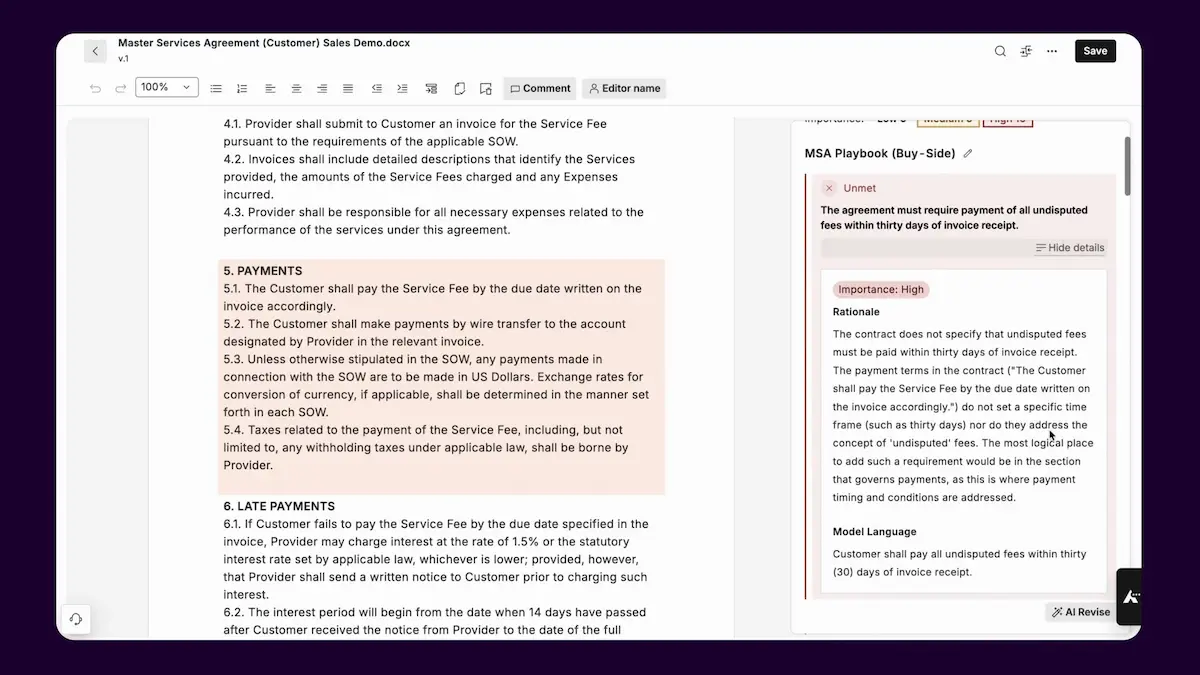
LegalOn Assistant is part of LegalOn’s platform, which combines review, matters, and agentic workflows to power the entire legal workday. LegalOn Assistant is your always-on legal co-pilot, answering questions, drafting fallback language, and summarizing key terms directly inside the contract you're working on, in Word or the browser.
Every answer is grounded in the same attorney-built playbooks that power LegalOn's contract review, covering 10,000+ pre-built legal issues across 135+ contract types. That means the assistant isn't guessing. Its reasoning is based on legal standards that a contract attorney has already vetted.
- Key differentiator: Attorney-built intelligence shared across the assistant, contract review, and matter management, so answers are grounded in the same standards your team already trusts.
- Proof points: Trusted by 9,000+ organizations. Teams save up to 85% of time on routine legal work, and 98% see immediate time savings.
- Implementation: Day 1 productivity, working natively inside Microsoft Word with no new workflow to learn.
- Best for: In-house teams that want an assistant, contract review, and matter tracking working together instead of as separate tools.
2. Harvey: Best for Large Law Firms
Harvey is built for the scale and workflows of large law firms, offering research, drafting, document review, and transactional due diligence across hundreds of attorneys. About 100,000 lawyers use it across firms, including A&O Shearman, Latham & Watkins, and O'Melveny.
- Trade-offs: Enterprise pricing and a sales cycle built around large firm deployments, generally out of reach for smaller in-house teams.
- Best for: Am Law 100 firms and large legal departments with the budget and scale to match.
3. CoCounsel Legal: Best for Research Grounded in Authoritative Sources
CoCounsel Legal, from Thomson Reuters, runs on the Deep Research engine grounded in Westlaw and Practical Law, so research, analysis, and drafting all reason from authoritative legal authority rather than the open web. Its 2026 next-gen release adds matter-specific workspaces and Brief Builder, an agentic drafting tool for complex briefs and motions with citation sourcing built in.
- Trade-offs: Strongest for litigation-heavy research and drafting; less oriented toward day-to-day contract workflow and matter tracking.
- Best for: Teams whose primary need is research depth grounded in Westlaw and Practical Law content.
4. Lexis+ with Protégé: Best for Litigation and Research-Heavy Teams
Formerly Lexis+ AI, Lexis+ with Protégé combines legal research, drafting, and citation validation in one grounded environment. They recently added Protégé Work, a skills-and-orchestration layer that plans and executes multi-step tasks like contract comparison, due diligence, and drafting. The tool allows for collaboration across firms, clients, and co-counsel.
- Trade-offs: Deep research and litigation drafting capability, with less depth on contract review workflows built around organization-specific playbooks.
- Best for: Litigation teams and researchers who need verified citations alongside drafting support.
5. Spellbook: Best for Contract Drafting Inside Word
Similar to LegalOn Review, Spellbook is an AI contract drafting and review tool that works directly inside Microsoft Word. It flags redlines and missing clauses, drafts new language from precedent, and benchmarks terms against market data.
- Trade-offs: Strong at the clause level, with less coverage of broader matter management or team-wide knowledge sharing.
- Best for: Teams whose primary need is contract drafting and negotiation support inside Word.
Put an always-on legal teammate inside your contracts. See LegalOn Assistant in action.
How to Tell a Lawyer-Built Legal AI From a Generic AI Wrapper
The best legal AI assistants are purpose-built platforms with attorneys involved at every stage. Other tools claim to be legal AI, but are actually a general-purpose model with a legal-sounding interface layered on top, or an “AI wrapper.”
Knowing the difference is key. Here's what to check before you buy.
Ask Who Built the Content
The most important question, and the one vendors are least eager to answer directly: are the underlying standards, playbooks, and legal content created and maintained by practicing attorneys, or is the vendor relying entirely on the AI model itself to generate legal reasoning?
A lawyer-built legal AI can point to specific attorneys behind its content and shows you the standards it's reasoning from. Bärí A. Williams, Head of Legal Content at LegalOn, leads a team of attorneys to create the very playbooks our customers use for contract review.
Look for Purpose-Built Architecture
A true legal AI platform is architected around legal work at every level, from its playbooks to its workflows. A wrapper is a general-purpose model with legal prompts on top, which means it inherits the same hallucination risk documented in general AI (Stanford HAI) without sufficient guardrails.
Check for Verifiable Reasoning
A lawyer-built tool shows why it applied a certain standard and provides the reasoning behind a suggested redline. A wrapper often returns a fluent, confident answer with no way to verify where it came from, which is exactly the pattern behind the sharp rise in AI-related sanctions against attorneys.
Confirm Enterprise Security and Data Practices
Legal work involves privileged and highly confidential material. Look for SOC 2 Type II certification, GDPR and CCPA compliance, and an explicit policy that your data is never used to train the underlying model.
Test It on Day One
A lawyer-built legal AI assistant should be useful immediately, with pre-built content you can rely on out of the box. If a vendor asks you to build everything from scratch before it delivers any value, or can't point to attorney involvement anywhere in the product, that's a sign you're looking at a wrapper rather than a purpose-built platform.
AI Legal Assistants: FAQs
What is the best AI legal assistant for in-house legal teams?
LegalOn Assistant is built for in-house teams. Ask it a question about a contract and the answer comes back grounded in playbooks that real contract attorneys wrote—10,000+ legal issues across 135+ contract types—so you're not second-guessing where it came from. It works inside Word from your first day, with nothing to set up.
Can ChatGPT or Claude replace a purpose-built legal AI assistant?
No. ChatGPT and Claude don't know your playbooks or your risk thresholds, and they can state a wrong answer with total confidence. They're fine for a quick, low-stakes draft. For anything that carries real legal risk, you want an assistant that reasons from standards a lawyer already vetted.
How much time can an AI legal assistant save?
A lot of the work that used to eat your afternoon. LegalOn cuts contract review time by up to 85%, and 98% of customers feel the difference right away. In LegalOn's 2026 survey of in-house legal teams, 79% said they spent less time on routine tasks after adopting AI—because the assistant clears the first-pass work and leaves the judgment to you.
What's the difference between an AI legal assistant and AI contract review software?
AI legal assistants answer routine questions, while AI contract review tools read and redline the whole document. You can ask the assistant about a single clause or have it draft fallback language on the spot.
Contract review takes a full agreement, runs it against your playbook, and hands back a ranked list of risks and redlines. Most teams use both, and LegalOn runs them off the same standards so nothing contradicts.
Do AI legal assistants hallucinate?
General-purpose ones can, which is why choosing one built for legal work and vetted by attorneys is so important. LegalOn keeps answers tied to verified legal sources and bases every answer on attorney-built playbooks. It also shows you the reasoning behind every suggestion, so you can check its work before you ever sign on the dotted line.
Is legal AI safe to use with confidential or privileged material?
Yes, when the tool is built for it. Legal AI should come with real security and clear rules about your data — not the default settings of a consumer chat app. Before you buy, check for SOC 2 Type II certification, GDPR and CCPA compliance, and a written promise that your data is never used to train the model.
How long does it take to get up and running?
With LegalOn, day one. It works inside Word with the playbooks already built, so your team is reviewing contracts the first time they open it. Tools that make you build every standard from scratch before they do anything useful can take months to earn their keep.
How much does an AI legal assistant cost?
It depends on your team's size and what you're buying—just the assistant, or contract review, matter management, and knowledge tools alongside it—plus how many people need seats. Most vendors price to your situation rather than share a sticker price.
What actually matters is how quickly it pays off: a tool that's useful on day one earns back its cost long before one that needs months of implementation.
What should we look for when choosing a legal AI assistant?
Three things: who built it, whether it shows its work, and how it handles your data. Ask the vendor to name the attorneys who wrote the playbooks. Have them pull up a real answer and show you the reasoning and sources behind it. Get their data policy in writing—SOC 2 Type II, GDPR and CCPA compliance, and no training on your data.
If a vendor dodges any of the three, you're likely looking at a legal-sounding chat window bolted onto a general model, which carries the same risks as a consumer chatbot.
Ready to See What a Legal AI Assistant Can Actually Do?
The right AI legal assistant software gives your team a legally trained teammate you can rely on for routine tasks. But the market for AI legal assistants keeps expanding, and new offerings increasingly sound alike.
That’s why "built for legal" has to mean more than a legal-sounding chat window. It means attorney-built playbooks, verifiable reasoning, and standards your team already trusts, applied the same way every time. LegalOn was built to clear that bar, combining attorney-grade intelligence with the speed to move business forward.