.svg)

Contract playbooks are becoming essential tools as legal teams integrate AI into contract review. Yet, despite their importance, 95% of in-house legal teams report gaps in their playbook coverage, and 54% don’t have playbooks at all.
In a recent webinar with Today’s General Counsel, LegalOn Technologies’ Head of Legal, Bärí Williams, and US CEO, Daniel Lewis, explored why playbooks matter, how they enhance AI-powered contract reviews, and the best strategies for building AI-ready playbooks.
Here’s a breakdown of what we covered—and why closing playbook gaps is the key to unlocking AI’s full potential in contract review.
Manual contract reviews are time-consuming, error-prone, and inconsistent, and legal teams face overwhelming contract workloads. According to our 2025 State of Contracting survey of 286 legal professionals:
This manual-heavy approach is unsustainable, especially as businesses demand faster deal cycles and stronger risk management.
AI adoption for contract review is accelerating, with usage increasing 75% year-over-year. Legal teams are turning to AI to save time, minimize risk, and strengthen contract terms. However, AI alone isn’t enough—without clear guidelines, it can produce inconsistent results, erroneous redlines, and legally inaccurate edits.
Where playbooks come in: AI works best when guided by structured rules. A well-defined contract playbook ensures AI applies standardized legal positions, flags deviations, and streamlines negotiation preparation. Instead of replacing human judgment, AI-powered playbooks allow legal teams to focus on higher-value tasks while automating repetitive review work.
“Playbooks ensure that every time you review a contract, you’re checking against the same issues. They ground the AI in reviewing against yours or industry standards, and not AI hallucinations.” — Daniel Lewis, LegalOn CEO
By implementing AI-ready playbooks, legal teams gain the efficiency of automation while maintaining legal accuracy and control.
A contract playbook is a structured guide that outlines a legal team’s preferred contract terms, fallback positions, negotiation strategies, and escalation procedures. It serves as a blueprint for contract review and negotiation, ensuring consistency and efficiency while mitigating risk.
Without a playbook, contract reviews rely on individual legal team members’ judgment, leading to inconsistencies, longer negotiations, and potential compliance gaps. By establishing a clear, documented strategy, contract playbooks ensure that every review follows predefined legal and business standards—whether performed manually or through AI-powered tools.
If your legal team is building its first AI-ready playbook, start with these eight high-impact contract clauses:
These clauses are frequent sources of negotiation and contain high-stakes legal terms, making them ideal for standardization.
To ensure AI interprets your playbook correctly, follow these best practices:
Following these rules ensures AI contract review is accurate, transparent, and aligned with business priorities.
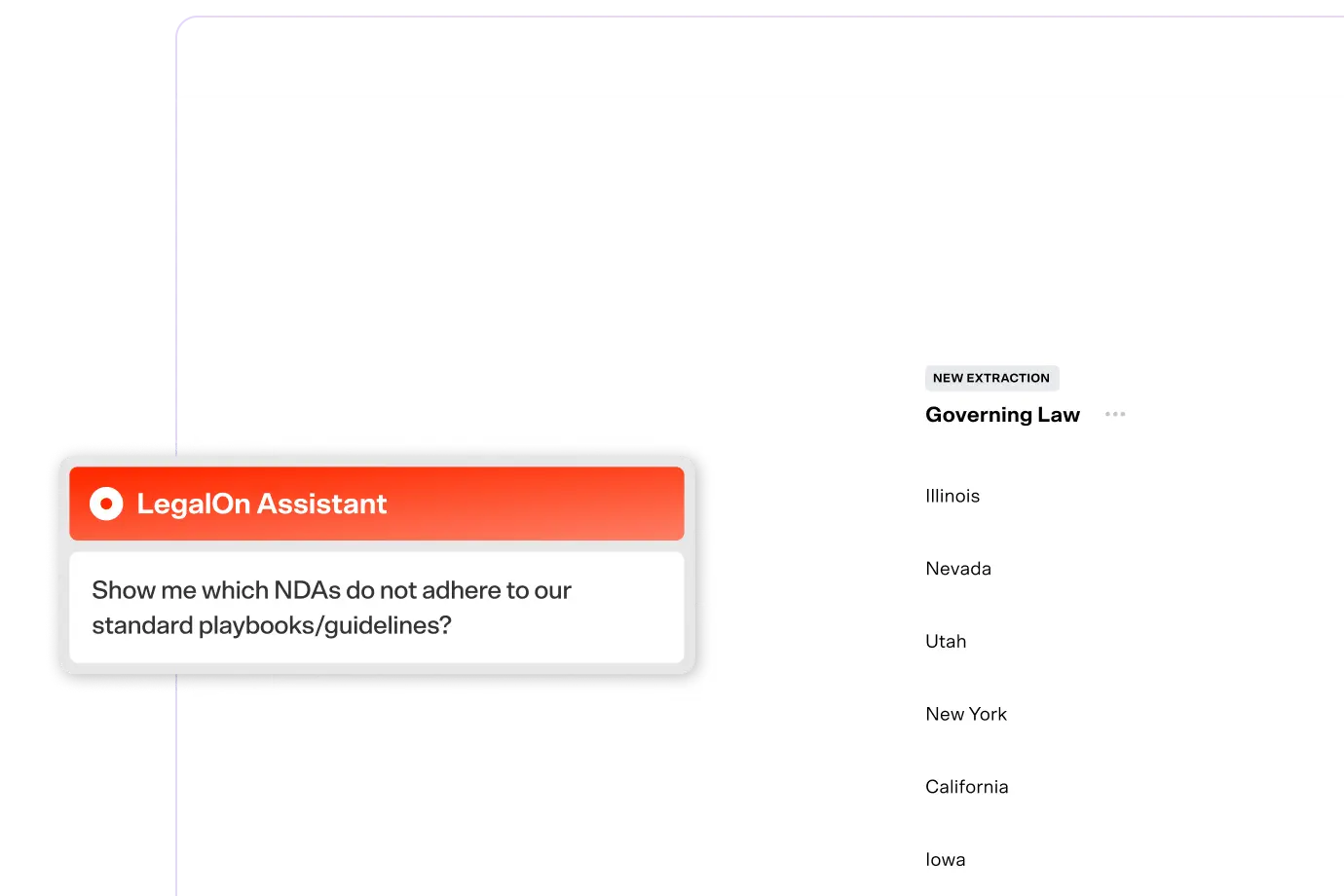
At LegalOn, we have a team of attorneys that have spent hundreds of hours building industry-standard playbooks that work on day one, along with teams of AI engineers that have created functionality for users to build their own playbooks in seconds. LegalOn provides:
This means your legal team doesn’t have to start from scratch. You can leverage pre-built playbooks and customize them as needed—reducing implementation time while ensuring accuracy. Learn more about LegalOn’s playbook features here.







.png)